
GTRegs is a regulatory monitoring tool for the Swiss financial market. It supports board members, executives, risk and compliance officers at regulated financial institutions in systematically classifying regulatory developments.

On 1 January 2026, Egon Hutter will take over the role of CEO from Erich Bucher, who is leaving the company for retirement.
Circular No. 32a of the Federal Tax Administration (FTA), published on January 20, 2025, deals with the tax treatment of restructuring measures for corporations and cooperatives.
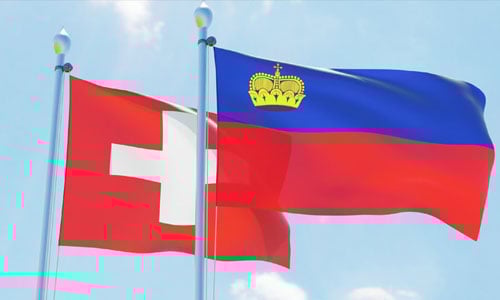
On 1 February 2018, the Swiss Federal Court decided that a Swiss company had not furnished adequate proof of the services entered in the accounts of a company with its registered office in Liechtenstein and thus had not provided substantiation in business respects. In the opinion of the Federal Court, higher standards of proof and stricter disclosure duties are applicable to service relations with companies in Liechtenstein. Although the judgement refers to a case in 2013, the tax authorities apply this judgement to current cases, even if the line of argumentation of the Federal Court is no longer valid in our view. Companies with cross-border service relations between Switzerland and Liechtenstein are thus advised to pay special attention to the documentation of services.
Grant Thornton Switzerland/Liechtenstein is presenting itself as a sponsoring partner at this year’s Finance Forum Liechtenstein. The conference networks some 600 decision-makers from the financial sector and offers top-class speakers, interesting workshops and attractive networking platforms.
Taxpayers with foreign securities can have part of the foreign withholding taxes offset in Liechtenstein and thereby reduce their tax burden. The Tax Regulation was revised as per 1 January 2018 and now contains more detailed rules in this connection. On the right, please find an overview of the most important amendments and how the offsetting of foreign withholding taxes functions.
The Tax Regulation was amended as per 1 January 2018 to concretise the documentation requirements for transactions with related parties. Companies that are obliged to document transfer prices but are unable to produce documentation in a timely manner run the risk of expenses not being considered tax-deductible or of income being offset for tax purposes.
Taxation in real-time: Gearing up for blockchain: The question is no longer whether blockchain will disrupt the tax system, but how far, how fast and how to ensure your business is up to speed. Putting the hype aside, what does blockchain really mean for tax compliance and management within your business? What are the main risks and opportunities? How can you begin preparing for the shake-up ahead?
The future of tax transparency opens your business to game-changing risks. But with these risks comes opportunity. How will your business steer through the risks of total tax transparency? And how can you take advantage of the opportunities? Tax affairs used to be a largely private matter between company and tax authority, with very little public disclosure beyond what was available in the report and accounts. Today, the veil of confidentiality is being stripped away.
President Donald Trump signed into law a sweeping overhaul of individual, business and international taxes. The enactment in 2017 means the effects must be included in 2017 financial statements. Grant Thornton breaks down the new tax reform law and provides a detailed analysis of major provisions, changes and new additions.
Antonio Donni in an interview with B2B New financial market law: Time is of the essence! The regulatory environment of the Swiss financial market is soon to undergo a radical change. The driving force is the European Union that created numerous new regulatory requirements in the wake of the last major financial market crisis. The wave of re-regulation also recently reached the Swiss financial and fund centre. Activities are now no longer possible without laws, regulations, government approvals and specific supervisory and audit regimes. The aim of this expert discussion in the B2B magazine is to point out the reforms in financial market law and the possible challenges entailed in their implementation. The following experts are taking part in the discussion:
Many working people plan to reduce their workload or take their pensions early before reaching normal pensionable age. However, it is often not taken into account that a reduction or termination of employment can also have consequences with regard to social insurance law.
Our Corporate Finance team provides advice and support to companies that want to grow their businesses. We engage in cross-border transactions throughout the transaction cycle to seize opportunities and reduce the risks involved. Find out in our latest Grant Thornton International Business Report (IBR) what the typical risks in cross-border transactions are and how we can help you navigate through the transaction cycle.
As of 1 January 2018 a non-established business making electronic and telecommunication services to a recipient in Switzerland must register for VAT in Switzerland.
This Tax Alert informs that based a people’s decision of 24 September 2017 the Swiss VAT rates for supplies as from 1 January 2018 are going to change as follows.
In addition to the goal of harmonising data protection, the EU General Data Protection Regulation (GDPR), directly applicable in the EU since 25 May 2018, is to serve to introduce a standard of data protection in the EU that meets state-of-the-art requirements of the internet age. As an EEA Member State, Liechtenstein adopted the GDPR in July 2018. In this connection the Liechtenstein Data Protection Act was revised and entered into force on 1 January 2019. The Swiss Data Protection Act is currently also being revised, and generally reflects the main thrust of the GDPR. It is not anticipated to be enacted until 2020.
Bitcoin transactions are based on Blockchain technology, which is said to be able to conduct anonymous transactions using pseudonyms. Although these pseudonyms do not contain any immediately evident personal data, this does not mean that data protection regulations can be disregarded for sensitive or very sensitive personal data. Since 2010/2011, it has been known that the identities behind bitcoin pseudonyms can be determined. Data contained in the transaction history can thus be attributed to actual people. Providers of Blockchain-based cryptocurrency transactions must therefore implement the new EU General Data Protection Regulation (“EU GDPR”) by the end of May 2018 and take account of the planned reforms to the Swiss Data Protection Act (“DSG”). e industries.
Grant Thornton Switzerland/Liechtenstein is appearing as a gold sponsoring partner at this year’s FinTech Conference in Liechtenstein. This attractive platform offers inspiring talks, workshops and various networking opportunities to financial service providers in Liechtenstein – now for the third year in a row.
The OECD Base Erosion and Profit Shifting/BEPS initiative obliges Switzerland for spontaneous information exchange on content of tax rulings with foreign fiscal authorities as from January 1, 2018.