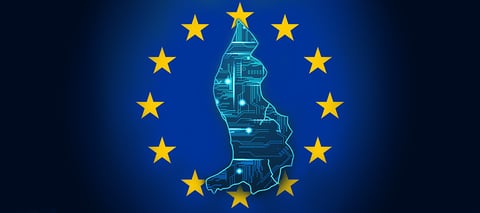
Regulatory framework for AI in Liechtenstein
With the EU Artificial Intelligence Act (Regulation (EU) 2024/1689, “EU AI Act”), a comprehensive, risk-based legal framework for artificial intelligence is already in place in Europe. The Regulation entered into force on 1 August 2024, although its requirements are becoming applicable in stages. The legal act is designated as EEA-relevant and is currently under review for incorporation into the EEA Agreement. Once incorporated, it will apply directly in Liechtenstein, meaning that the same rules will apply as in the EU. Liechtenstein already participates as an observer in meetings of the AI Board and closely follows regulatory developments at European level.
However, Liechtenstein financial institutions should not sit back and wait until the EU AI Act is incorporated into the EEA Agreement. As the supervisory authority, the Financial Market Authority Liechtenstein (FMA) explicitly addresses not only the opportunities presented by technology-based business models but also the associated risks and must ensure that customer protection is safeguarded and confidence in the financial market is maintained. To ensure continued market access to the European Economic Area, business models must also comply with European requirements. Finally, provisions of sector-specific legislation, such as the General Data Protection Regulation (GDPR) and the Liechtenstein Data Protection Act, also apply to the use of AI.
Action is needed even before AI is deployed in core processes
Regardless of when the EU AI Act is incorporated into the EEA Agreement, regulated financial institutions are already required to systematically identify and analyse the risks associated with the use of AI and to implement appropriate measures. The more closely AI is integrated into decision-making processes, the less adequate purely informal oversight becomes. The specific risks depend heavily on the circumstances of each case. Depending on the AI provider, the selected licence, the settings and, in particular, the scope of application, the following risks, among others, must be considered when using AI:
- Governance and organisational risks, for example where responsibilities are unclear or control and escalation mechanisms are lacking.
- Data protection risks associated with the transfer of personal data to third parties, including transfers to third countries under the GDPR.
- Confidentiality risks, in particular the risk that employees may disclose trade secrets through the improper use of AI tools.
- Outsourcing and third-party risks associated with the use of external AI solutions, such as cloud-based models, which require more robust contractual arrangements and monitoring. Dependencies on AI service providers may also arise.
- Operational risks, such as the security, reliability and traceability of results.
- Reputational and liability risks: AI decisions that lack transparency or are perceived as unfair can permanently undermine the trust of customers and the public.
- AI Act compliance risks, particularly in connection with the classification of AI applications, the identification of any applicable transparency obligations and the assessment of whether a particular use case falls within the specific requirements of the EU AI Act.
The risks mentioned may also exist even if AI is not used in core processes or in customer interactions, but is used only as a support tool, for example for research or analysis. In practice, AI tools from external providers are also frequently used. In such cases, the supervised institution is required to ensure compliance with the applicable outsourcing requirements and to appropriately address the risks associated with a potential service provider outage.
Conclusion: “AI Health Check”
With the increasing use of AI and regulatory developments in Europe, there is also a growing need for a structured overview of existing risks and requirements. Our AI Health Check helps Liechtenstein financial institutions assess their current position, identify areas for action and define the next steps towards the controlled and legally compliant use of AI. Our specialists from the Liechtenstein team and the Regulatory & Compliance FS team would be pleased to assist you.